
22.2 Risk Management Procedures
Risks for licensees show up in everyday transactions—and many carry legal consequences (license discipline, lawsuits) and
financial/professional consequences (loss of compensation, damaged reputation).
This topic gives you a “big picture” list of where problems most commonly happen, so you can recognize risk early and manage it proactively.
Primary Areas of Risk (High-Level)
Common risk areas in real estate practice include:
- Agency
- Property disclosures
- Listing and selling process
- Contracting process
- Fair Housing
- Antitrust
- Rules and regulations
- Misrepresentation
- Recommending providers
- Financing and closing
- Trust fund handling
- Safety and security
Study tip: When you see a test question about “reducing risk,” think:
disclose properly, document everything, stay in your lane (don’t give legal advice), follow fair housing rules, and handle trust funds correctly.
Exhibit 22.2 — Real Estate Management Risks
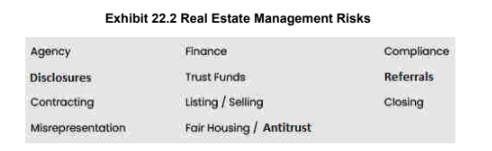
This exhibit is a quick “risk radar.” It groups common problem areas into categories like agency, finance, and compliance.
Protect Yourself
Choose the best answer for each question, then select Check Answers.
Which of the following is listed as a primary area of risk for real estate licensees?
Antitrust Antitrust is specifically listed as a primary risk area because certain cooperative behaviors (like price fixing) can create serious legal exposure.
Trust fund handling is considered a risk area mainly because mistakes can lead to:
License discipline and legal consequences Handling earnest money/escrow incorrectly can trigger serious penalties because state laws strictly regulate how client funds must be held and recorded.