
20.2 Property Disclosures
- Step 1: Separate seller’s disclosure from licensee disclosure (they’re not the same).
- Step 2: Memorize “material fact” and think like a buyer: would this affect value or desirability?
- Step 3: Treat environmental hazards like other material facts: identify red flags, disclose what’s known, and refer to experts.
- Read: Chapter 20 section on Property Disclosures
- Study aids: Exhibit 20.2 (Property Condition Disclosure Form) and Exhibit 20.3 (For Your Protection…)
Many states require sellers to provide a written residential property condition disclosure to prospective buyers.
This disclosure is the seller’s summary of the property’s condition at the time the parties contract for sale, usually on a state-approved form.
to disclose known material facts.
Owner’s role: When required, owners of previously occupied single-family homes and 1–4 unit residential properties must provide the disclosure to buyers
(with certain exemptions). The disclosure is typically delivered no later than when the buyer makes an offer.
Licensee’s role: If an agent is involved, the agent must disclose any and all material facts the agent knows or should reasonably know,
regardless of what the seller states on the form.
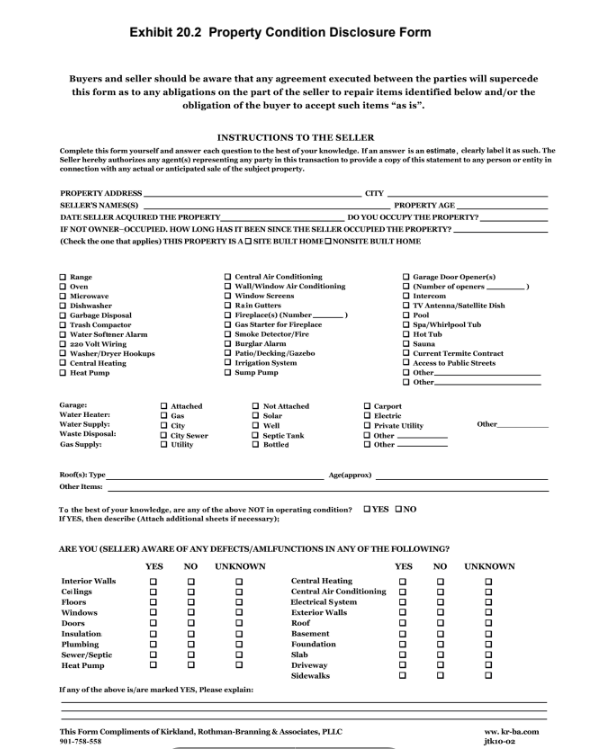
This form shows the level of detail sellers may be asked to disclose about property systems and conditions.
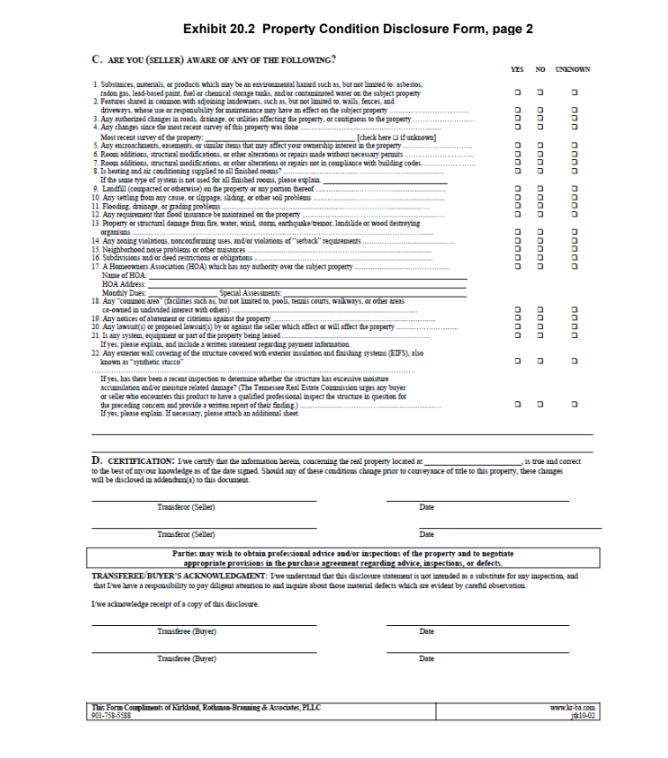
Notice how the form covers a wide range of potential issues, including environmental concerns and HOA-related questions.
On many disclosure forms, sellers respond to questions about systems and conditions. Common response types include:
- “No problems” / “No defects”: the seller is stating they have no knowledge of a defect.
- “Yes, there is a problem”: the seller discloses a known issue (often with an explanation).
- “No representation”: the seller makes no claim of knowledge about that item.
If a seller denies knowledge of a defect that actually exists, the seller may be liable for intentional misrepresentation.
With “no representation,” the seller is not making a knowledge claim about that specific feature.
When disclosure is required, failure to deliver the disclosure statement in a timely manner can give the buyer a right of rescission
(the ability to cancel under certain conditions and reclaim deposits). The buyer must follow required procedures and deadlines.
The buyer’s right to cancel generally persists until closing or occupancy, whichever occurs first.
A material fact is information that could affect the value or desirability of a property to a buyer if the buyer knew it.
Agents have a duty to disclose material facts they know—or should reasonably know.
- Adverse property condition issues
- Title defects
- Environmental hazards
- Other property defects that impact value or safety
Not everything is considered “material.” Items like property stigmatization (crime/death on the property) are often not required disclosures,
and some states restrict disclosures about registered sex offenders (often directing buyers to public registries instead).
Environmental hazards can exist inside a structure, on the land, or nearby. Laws regulate some hazards, but not all.
The safest professional approach is to treat potential environmental hazards like other material facts:
disclose what’s known and refer to qualified experts.
- Lead-based paint (homes built before 1978; required pamphlet + disclosures)
- Mold (often a latent defect; water damage/flooding can be a red flag)
- Asbestos (risk when disturbed; professional removal)
- Radon (testable and mitigatable; prolonged exposure risk)
- Carbon monoxide (odorless; detectors recommended)
- Water quality / septic issues (testing + inspections)
- Illegal drug manufacturing (toxic residue; must investigate and disclose)
- Underground storage tanks (USTs) (leaks contaminate soil/groundwater; costly removal)
- Formaldehyde / indoor air quality concerns
Licensees aren’t expected to be environmental experts, but they are expected to be aware of common issues, disclose known material facts,
distribute required pamphlets, and know where to seek professional help.
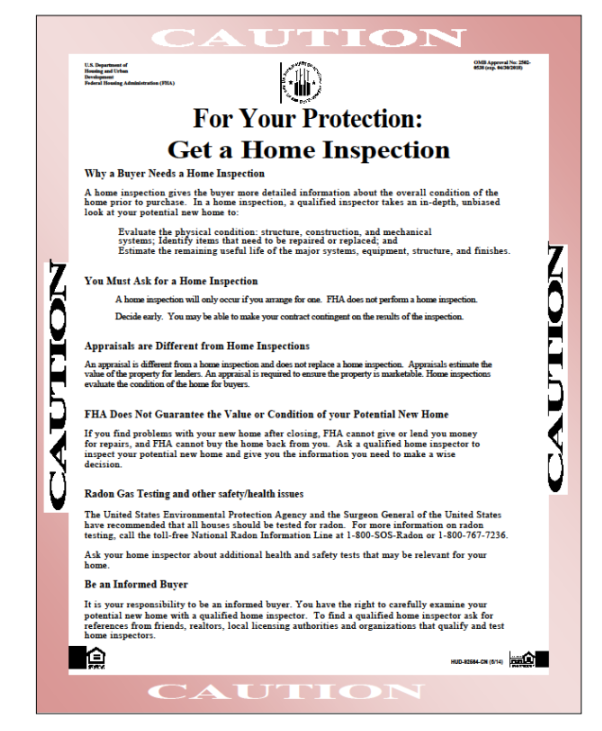
Inspections help buyers understand property condition and safety issues before purchase.
Home warranties (home service contracts) cover service, repair, or replacement of major systems and appliances—usually for a one-year term.
Cost varies by location, property type/size, and coverage level.
Warranties commonly exclude pre-existing conditions, improper installation, non-wear-and-tear failures, and many items not specifically listed in the contract.
The homeowner typically pays a service fee per repair visit and must use the