
16.4 The Cost Approach
16.4 The Cost Approach
The cost approach estimates value by adding the land value to the current cost to build the improvements, then subtracting depreciation. It’s especially useful for newer properties and special-purpose buildings where comparable sales are limited.
The Core Idea (Cost New Minus Depreciation)
The cost approach is based on the idea that a buyer won’t pay more for a property than it would cost to buy the land and build a similar improvement—minus depreciation.
In simple terms:
Reproduction Cost vs. Replacement Cost
- Reproduction cost: cost to build an exact replica using the same materials and design.
- Replacement cost: cost to build a property with equal utility using modern materials and standards.
Depreciation (What Gets Subtracted)
Depreciation is any loss in value from the cost new of the improvements. In appraisal, depreciation is commonly grouped into:
- Physical deterioration (wear and tear)
- Functional obsolescence (layout/design/features that are outdated or undesirable)
- External obsolescence (negative influences outside the property, like traffic, nearby nuisances, or market conditions)
Steps in the Cost Approach
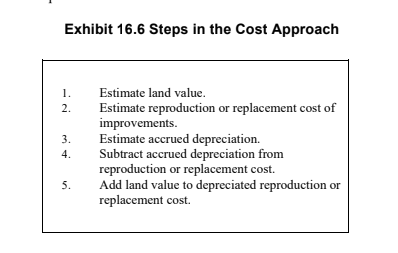
- Estimate land value.
- Estimate reproduction or replacement cost of improvements.
- Estimate accrued depreciation.
- Subtract depreciation from the reproduction/replacement cost.
- Add land value to the depreciated cost of improvements.
Cost Approach Illustration
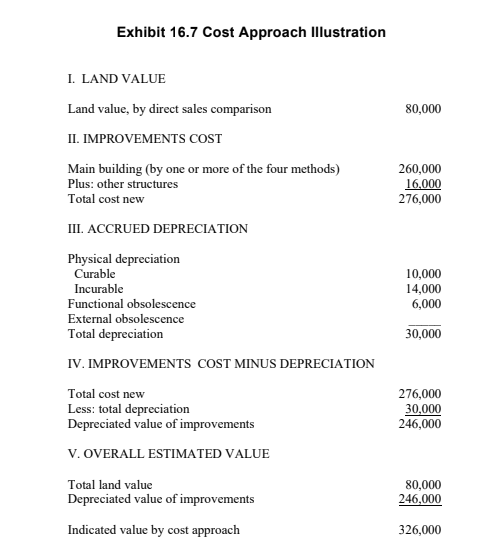
Building the Value
Choose the best answer for each question, then select Check Answers.
The cost approach is MOST useful when:
The cost approach is especially helpful for newer properties and special-purpose buildings.
Which type of depreciation is caused by factors outside the property?
External obsolescence comes from outside influences (location/market/environmental factors).