
16.3 The Sales Comparison Approach
16.3 The Sales Comparison Approach
The sales comparison approach is the most common method for valuing residential property. It estimates value by comparing the subject property to recently sold, similar properties (comparables) and then adjusting for differences.
The Core Idea (Substitution)
The sales comparison approach is based on the principle of substitution: a buyer won’t pay more for a property if a similar substitute is available for less.
Appraisers look for comparable sales that are as similar as possible, then make adjustments to reflect how the subject differs.
Steps in the Sales Comparison Approach

- Research the market for recent sales of similar properties.
- Select comparables that are close in location, time, and features.
- Compare the subject to each comparable feature-by-feature.
- Adjust each comparable’s sale price for differences.
- Reconcile the adjusted values into one indicated value for the subject.
Comparable Sales and Adjustments (How It Works)
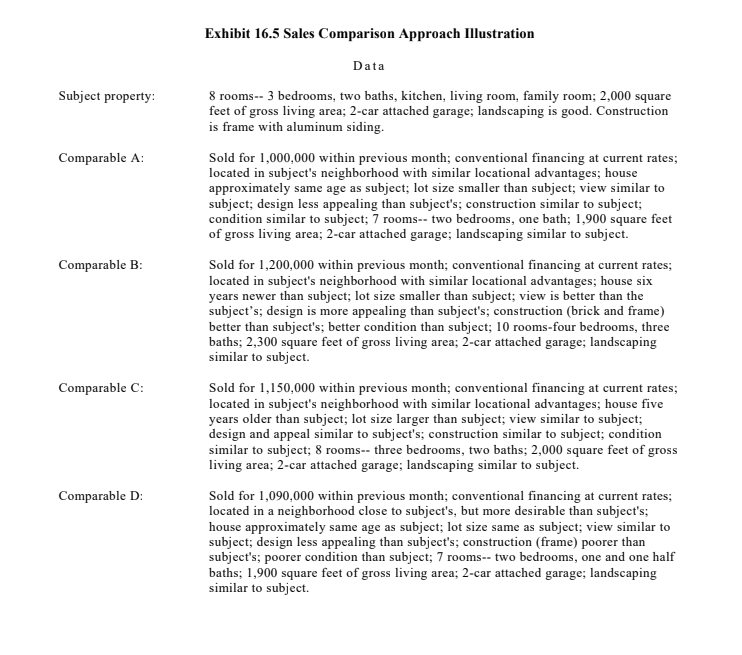
A good comparable sale is recent, nearby, and similar in size, condition, quality, and features. If a comparable is different, the appraiser makes a dollar adjustment so the comparable reflects what it would have sold for if it were more like the subject.
Example Data (Subject vs. Comparables)
Example Adjustments Grid
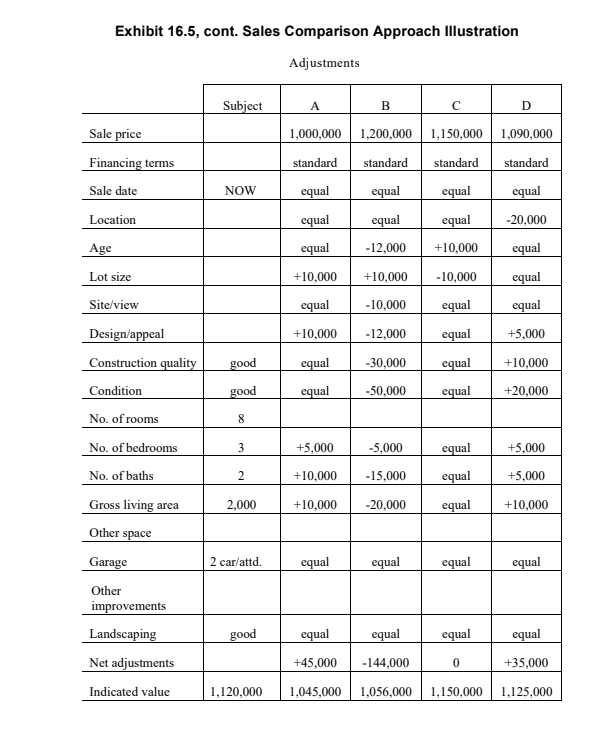
If the comparable is inferior to the subject, you add value to the comparable’s price.
If the comparable is superior to the subject, you subtract value from the comparable’s price.
CMA vs. Appraisal (Quick Connection)
A comparative market analysis (CMA) uses similar logic—recent comparable sales—to estimate a likely price range. The difference is that an appraisal is performed by a regulated, disinterested third party and follows formal standards.
Comparing the Comps
Choose the best answer for each question, then select Check Answers.
In the sales comparison approach, adjustments are made to:
Appraisers adjust the comparable’s sale price to reflect what it would have sold for if it were like the subject.
A comparable sale is inferior to the subject (smaller, fewer features). What is the typical adjustment direction?
If the comparable is inferior, you add to the comparable to make it more like the subject.