
17.2 Initiating a Mortgage Loan
17.2 Initiating a Mortgage Loan
The mortgage loan process begins when the borrower completes a loan application and submits it to a lender. In this topic, you’ll learn what’s included in the application package and what underwriting is designed to evaluate.
The Loan Application
Most lenders use a version of the Uniform Residential Loan Application (commonly associated with Fannie Mae). The application collects information about the property and the borrower, and it must include supporting documentation.
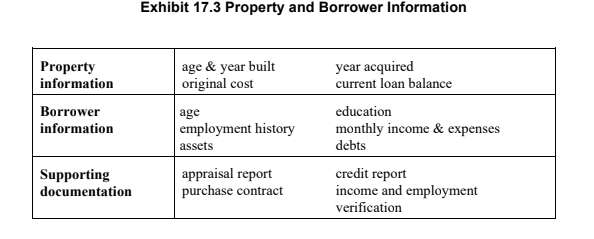
The application typically includes the requested loan amount based on the underlying transaction (purchase, refinance, etc.). The process is considered “initiated” when the lender receives the completed application package.
Mortgage Loan Underwriting
Underwriting is the process of assessing the lender’s risk in making the loan. Underwriters evaluate both the borrower and the property.
What the lender is trying to determine
- Borrower risk: ability and willingness to repay (income, cash reserves, credit, employment stability).
- Property risk: whether the collateral value is strong enough to cover potential losses.
- Loan terms: the interest rate, term, and structure that fit the risk profile.
Loan-to-Value Ratio (LTV)
The loan-to-value ratio (LTV) is the relationship of the loan amount to the property value, expressed as a percentage. Lenders typically lend only a portion of the property’s value. The difference is covered by the borrower’s down payment.
Private Mortgage Insurance (PMI)
If the LTV is high (meaning the borrower has little equity), the lender may require private mortgage insurance (PMI). PMI protects the lender for the portion of the loan above a typical LTV threshold (often 80%).
Starting the Loan
Choose the best answer for each question, then select Check Answers.
Mortgage loan underwriting is primarily the process of:
Underwriting evaluates borrower ability to repay and the property’s value as collateral.
A lender requires PMI most commonly when:
PMI is commonly required when LTV is high (small down payment, less equity).