
21.3 Financial Settlement of the Transaction
The process of settlement is how the transaction is financially “balanced” at closing. The closing statement accounts for
what the buyer and seller owe and what they receive, including items that must be shared through
proration.
Settlement process (5 steps)
- Identify selling terms and closing costs.
- Determine non-prorated debits and credits.
- Determine prorated debits and credits.
- Complete the closing statement.
- Disburse funds.
Selling terms and closing costs
- Selling terms include the sale price, deposit/down payment, and financing arrangements.
- Closing costs are final expenses paid at closing (fees, taxes, title-related items, mortgage-related fees, etc.).
- Who pays what is set by the sale contract or, if not specified, by custom.
Debits and credits (what they mean)
A debit is an amount a party must pay at closing (or has already paid before closing).
A credit is an amount a party must receive at closing (or has already received before closing).
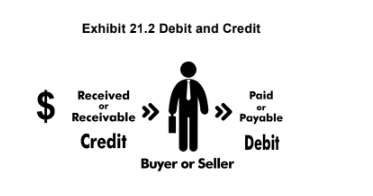
The totals determine what happens at closing:
- Buyer: If buyer debits exceed buyer credits, the difference is what the buyer must bring to closing.
- Seller: If seller credits exceed seller debits, the difference is what the seller receives at closing.
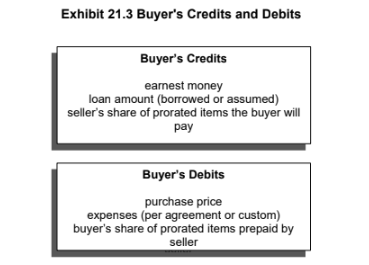
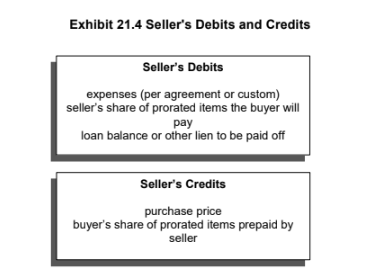
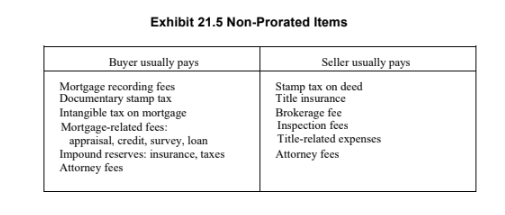
Non-prorated items (one party only)
Non-prorated items are costs incurred by one party only and are not shared.
Prorated items (shared because of timing)
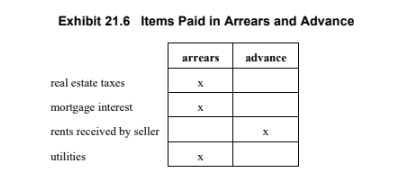
Prorated items are shared between buyer and seller because they cover time before and after closing.
Some items are paid in advance (prepaid), and others are paid in arrears (paid later).
With a prorated item, there is always a debit to one party and a matching credit to the other.
Settling Up
Choose the best answer for each question, then select Check Answers.
In a closing statement, a “credit” is best described as:
Credits are amounts a party receives at closing (or has already received).
Which statement is true about a prorated item at closing?
Prorated items always appear as a debit to one party and a matching credit to the other.