
4.5 Condominiums
Condominiums
When a buyer purchases a condominium unit (like Unit #1 in the illustration), they obtain a fee simple interest in the airspace of their apartment and a tenancy in common interest in a pro rata share of the common elements (pool, parking, garage, building structure, etc.). For example, if there are nine units, each owner holds a one-ninth share of the common elements.
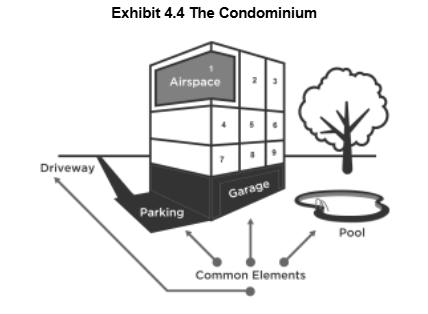
Interests and Rights: Units can be owned in severalty, jointly, in trust, or by other legal forms. Each owner has exclusive rights to their unit and co-ownership of the common areas. Owners may sell, mortgage, or encumber their unit, but cannot sell their interest in the apartment separately from the common elements.
Possession, Use, and Exclusion: Owners possess their apartment space exclusively, but share common areas. Some amenities—like a health club—may require extra fees. Owners as a group can exclude non-owners from common areas.
Transfer and Encumbrance: Units can be sold or mortgaged individually, but resale may require association approval. Each unit is assessed and taxed individually, based on its value and share of common elements.
Condominium Creation: Created by recording a declaration and master deed, which must meet local legal requirements. The declaration includes legal descriptions, surveys, plat maps, ownership shares, association bylaws, voting rights, and restrictions.
Organization and Management: The association (often with a board of directors) manages the property, finances, and policies. Management may be handled by professionals or resident managers.
Owner Responsibilities: Owners maintain their unit’s systems and condition, insure contents, and pay regular assessments for property expenses (maintenance, insurance, management, legal, repairs, etc.). Failure to pay assessments can result in foreclosure.
Condo Living
Choose the best answer for each question, then select Check Answers.
What type of ownership does a condominium unit owner have in the common elements?
Condominium owners share the common elements as tenants in common.
What happens if a condominium unit owner fails to pay their assessments?
Unpaid assessments can lead to foreclosure by the association.