
19.4 Tax Lien Enforcement
- Step 1: Remember the order: delinquent taxes → lien enforcement → sale/foreclosure → redemption (if allowed) → deed/title transfer.
- Step 2: Use Exhibit 19.2 to visualize the enforcement flow.
- Step 3: Connect it to transactions: tax liens can cloud title and must be addressed before closing.
- Read: Chapter 19 section on Tax Lien Enforcement
- Study aid: Exhibit 19.2 (Tax Lien Enforcement flow)
When an owner doesn’t pay property taxes, the government still has to fund public services. To collect what’s owed, the law allows the taxing authority
to enforce the tax obligation through a tax lien and, in some cases, a tax sale or foreclosure.
From a real estate perspective, unpaid taxes can create a serious title issue. A buyer (and the buyer’s lender) typically wants clear title, so delinquent
taxes often must be resolved before closing.
While details vary, tax lien enforcement generally follows a predictable path:
- Taxes become delinquent (unpaid by the deadline).
- A tax lien attaches to the property (a legal claim for the unpaid taxes).
- The government may sell a tax certificate or begin a tax sale/foreclosure process.
- The owner may have a right of redemption (a chance to pay what’s owed and keep the property).
- If not redeemed, the process can lead to issuance of a tax deed and transfer of title.
Vocabulary check:
Tax lien = the claim for unpaid taxes
Tax deed = a deed issued after enforcement that can transfer ownership (subject to state rules)
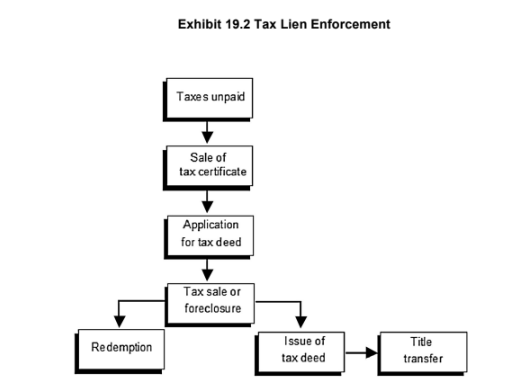
Use this flowchart to memorize the sequence from unpaid taxes to potential title transfer.
Many tax enforcement systems include a redemption period. During redemption, the owner (and sometimes other parties with an interest in the
property) can pay the required amounts to stop the enforcement process and retain ownership.
- Redemption typically requires paying delinquent taxes plus penalties, interest, and possibly costs.
- Deadlines are strict—missing the redemption window can lead to loss of ownership rights.
- Because rules vary, always verify the current Alabama redemption requirements and timelines.
In a purchase or refinance, tax liens are a big deal because they can cloud title. A title search will typically reveal delinquent taxes,
tax liens, or tax sale activity. If an issue exists, the parties usually must address it before the transaction can close.
- Seller side: delinquent taxes may have to be paid from sale proceeds.
- Buyer side: buyers should understand whether any tax enforcement action is pending.
- Agent role: identify red flags early and direct clients to the appropriate professionals (closing attorney/title company/tax office).
When Taxes Go Unpaid
Choose the best answer for each question, then select Check Answers.
What is the main purpose of tax lien enforcement?
The enforcement process exists to collect delinquent property taxes so public services can be funded.
What does “redemption” generally mean in a tax lien context?
Redemption is the owner’s (or other eligible party’s) right to stop the process by paying taxes, interest, penalties, and costs within the allowed time.
Tax lien enforcement is the legal process used to collect delinquent property taxes. If taxes remain unpaid, the process can lead to tax sale/foreclosure,
possible redemption, and potentially a tax deed and title transfer. This completes Lesson 19.