
13.3 Operating a Real Estate Brokerage
13.3 Operating a Real Estate Brokerage
Operating a brokerage means generating listings, marketing effectively, managing the pre-closing process, handling trust funds correctly, and complying with advertising and antitrust laws.
Obtaining Listings
Listings are a traditional source of brokerage income. A listing can generate revenue even when a cooperating broker finds the buyer—while buyer work may produce no income without an exclusive agreement.
Exhibit 13.4 — Listing Steps
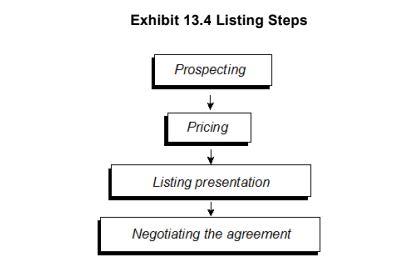
- Prospecting: create and reach listing prospects.
- Pricing: develop a careful price range using comparables (and avoid presenting yourself as an appraiser).
- Listing presentation: explain value, marketing plan, and transaction process.
- Negotiating the agreement: secure a signed listing and submit to the broker for approval/signing.
Marketing Listings
Marketing moves from broad exposure to direct buyer interaction, then into offers and negotiations. Disclosures must be made at the earliest appropriate time, based on state law.
Exhibit 13.5 — Marketing Steps

- Marketing plan: coordinated promotion and selling activities.
- Selling the prospect: qualify, show property, gather reactions, report results.
- Obtaining offers: present offers promptly; assist with counteroffers until meeting of the minds.
Pre-Closing Activities (Contingency Period)
- After acceptance, the property is “under contract.” Buyer and seller must complete required tasks before closing.
- Agent should promptly submit the contract and earnest money to the employing broker (deadlines vary by state; often very short).
- Agent may help with financing, inspections, title issues, repairs, and communications.
Handling Trust Funds (Escrow)
Two major violations to avoid:
Commingling (mixing escrow funds with personal/business funds) and conversion (misappropriating escrow funds for personal/business use).
Commingling (mixing escrow funds with personal/business funds) and conversion (misappropriating escrow funds for personal/business use).
- Brokers must maintain a trust account and follow state deposit deadlines.
- Funds stay in trust until the transaction closes or terminates, then are